Why Does My Yorkie Keep Pulling On Leash
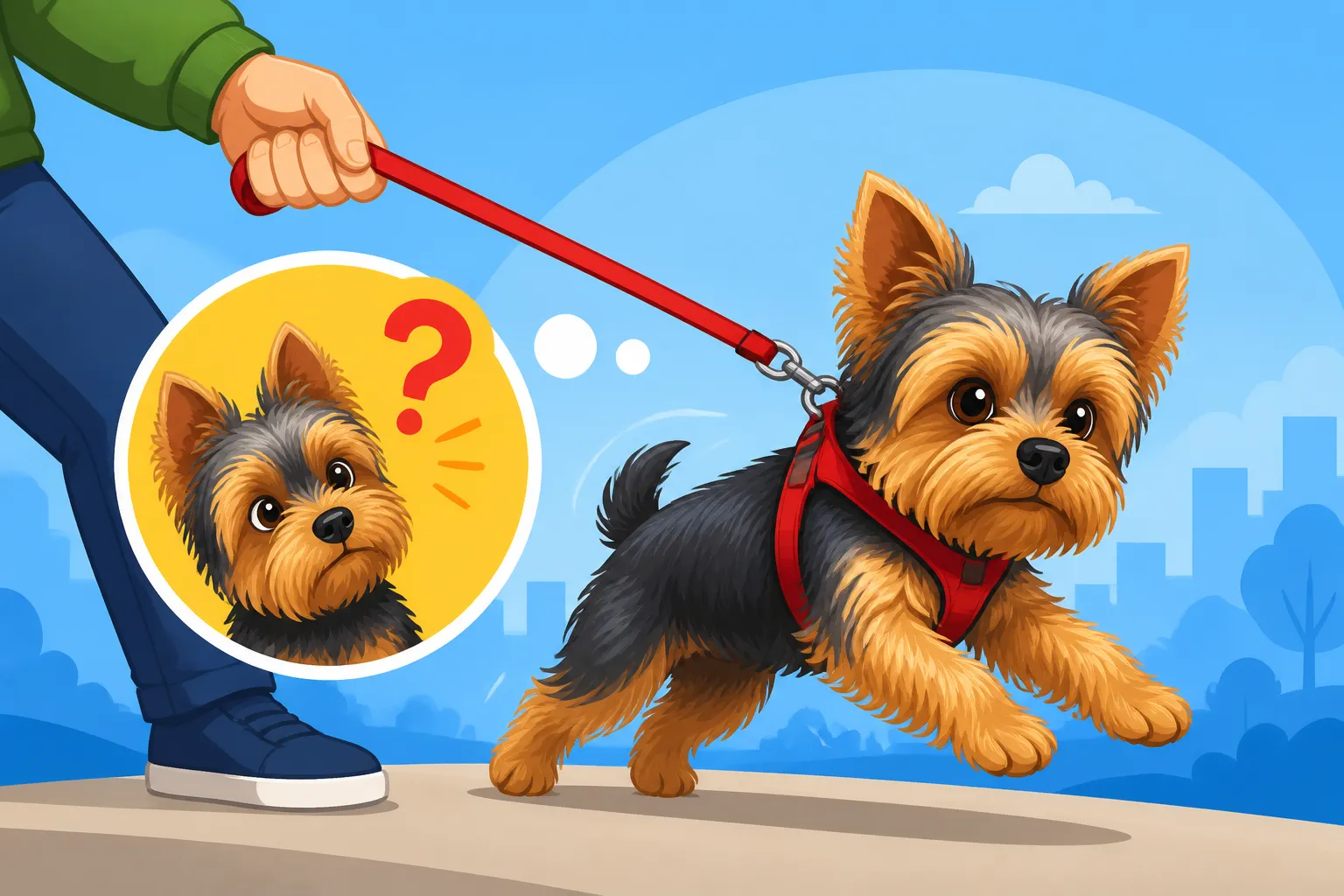
It’s a scenario many Yorkshire Terrier parents know all too well: you step outside, leash in hand, ready for a pleasant stroll, and suddenly your tiny Yorkie transforms into a miniature sled dog, dragging you down the street. Despite their small stature, their strength and determination to pull can be surprisingly potent, making walks feel more like a tug-of-war than an enjoyable outing. This guide is here to shed light on why your spirited Yorkie might be pulling on the leash and, more importantly, equip you with the practical strategies and understanding you need to transform those chaotic walks into calm, comfortable adventures for both of you.
Understanding Why Your Yorkie Pulls on the Leash
It can be incredibly frustrating when your Yorkie seems determined to pull your arm out of its socket, especially when you’re trying your best to give them a good walk. But remember, they aren't doing it to spite you. There are often very natural, dog-centric reasons behind this behavior. Understanding these root causes is the first step toward finding a solution that works for you and your furry friend.
The Terrier Instinct and Energy Levels
Let's face it, Yorkies are terriers at heart, and that means they come with a bundle of inherent traits that influence their behavior. Terriers were originally bred to hunt vermin, and that strong prey drive is still very much alive in our little companions. When a Yorkie is on a walk, their senses are on high alert. Every rustle in the bushes, every bird chirping, every intriguing scent on the ground is a potential "target" or a fascinating new piece of information they must investigate. Their natural inclination is to follow these impulses with gusto, and the leash becomes merely an obstacle in their quest.
Furthermore, while Yorkies are small, they often possess a surprising amount of energy and curiosity. They might be eager to explore, meet other dogs, or simply get to that interesting lamp post ahead of you. This pent-up energy, combined with their strong investigative nature, can manifest as persistent pulling. They're not being disobedient; they're simply expressing their natural instincts and enthusiasm for the world around them. It's easy to forget that what seems like a simple walk to us is a rich, sensory experience for them, full of exciting discoveries that they're hardwired to pursue.
Lack of Proper Leash Training Foundations
One of the most common reasons a Yorkie pulls isn't maliciousness, but simply a lack of understanding about what "loose-leash walking" actually means. Many puppies, and even adult dogs, are never explicitly taught how to walk politely on a leash. From their perspective, the leash means they get to go forward, and the harder they pull, the faster they get to where they want to go. This quickly becomes a self-reinforcing behavior. If pulling gets them to the park quicker or to sniff that fascinating patch of grass, why wouldn't they do it?
Another factor can be excitement or even fear. A young, exuberant Yorkie might pull purely out of sheer joy and anticipation for the walk. They're just so happy to be out and about! Conversely, a Yorkie who is anxious or fearful might pull to try and get away from something they perceive as threatening, whether it’s a loud noise, a strange person, or another dog. If they haven't learned that a loose leash keeps them safe and allows for exploration, they'll resort to the only method they know to control their environment: pulling to create distance or reach something. This lack of foundational training, where walking calmly on a leash is rewarded and encouraged, often sets the stage for a lifetime of pulling struggles.
Over-Stimulation and Sensory Overload
For a small dog like a Yorkshire Terrier, the world can be an incredibly overwhelming place. What seems like a normal stroll to us can be a sensory explosion for them. Think about it: they're much closer to the ground, where all the most interesting smells reside. Every blade of grass, every discarded wrapper, every paw print tells a story. Combine this olfactory overload with the sights and sounds of a busy street – cars whizzing by, larger dogs barking, children playing, bicycles silently approaching – and it's easy to see how a Yorkie can become incredibly over-stimulated.
When a Yorkie is over-stimulated, their natural instinct is often to react impulsively. They might pull to get closer to an intriguing smell, or pull away from something that startles them. Their tiny brains are working overtime to process all this information, and the result can be a dog that's not thinking calmly or rationally about leash manners. This is especially true for young puppies who are still learning about the world. It’s not uncommon for a Yorkie to start a walk calmly, only to become a pulling machine once they encounter a particularly stimulating environment. Recognizing that their pulling might be a coping mechanism for an overwhelming world can help us approach their training with more empathy and understanding.
Practical Strategies to Stop Yorkie Leash Pulling
Now that we've dug into why your Yorkie might be pulling, let's talk about the good stuff: how to actually stop it! It's not about forcing them, but rather about teaching them a new, more enjoyable way to navigate the world on a leash. Consistency and positive reinforcement are going to be your best friends here.
Equipment Matters: Harnesses Over Collars
One of the most crucial steps to improving your Yorkie’s leash manners, and protecting their delicate bodies, is selecting the right equipment. For a small breed like a Yorkshire Terrier, a traditional neck collar can actually be quite dangerous if they pull persistently. Yorkies are prone to conditions like Yorkshire Terrier Collapsing Trachea: Signs and Care or other respiratory issues, and constant pressure on their trachea from a collar can exacerbate these problems or even lead to injury. Instead, a well-fitting harness is highly recommended. You can learn more about Why Harnesses Are Better Than Collars for Yorkies.
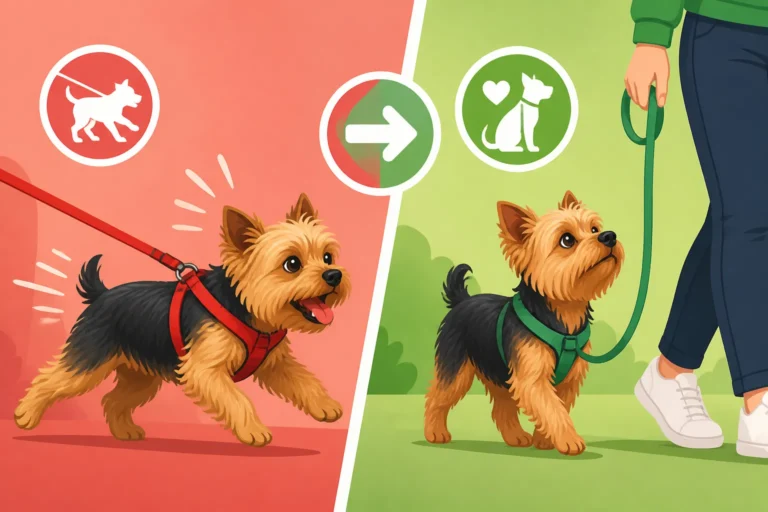
There are different types of harnesses, but for a determined puller, a front-clip harness can be a game-changer. Unlike back-clip harnesses that can sometimes encourage pulling (as the dog feels like they're being pulled forward, activating their opposition reflex), a front-clip harness redirects your Yorkie's momentum. When they pull, the leash clip on their chest gently turns them to the side, making it uncomfortable and ineffective for them to continue forging ahead. This subtle redirection teaches them that pulling doesn't get them closer to their goal. When looking for the right harness, consider brands that offer small sizes with good adjustability. You can find a wide variety of options and read reviews on platforms like Amazon to ensure you get a comfortable and effective fit for your petite pal. Always ensure the harness fits snugly but allows for full range of motion without chafing or restricting their breathing.
Positive Reinforcement and Lure Training
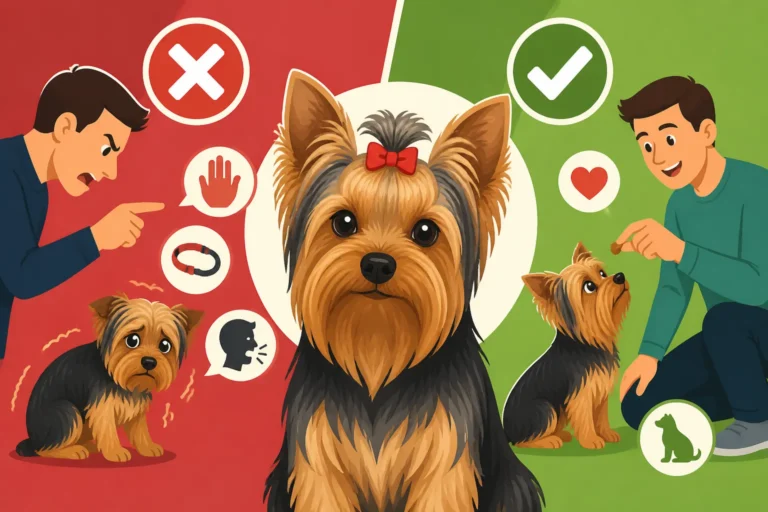
The core of effective leash training for your Yorkie lies in positive reinforcement. This means rewarding the behavior you want to see, rather than punishing the pulling. Your Yorkie needs to learn that a loose leash equals good things – treats, praise, and forward movement – while a tight leash means nothing fun happens. Many people find that specific dog treats designed for training, which are small and high-value, work wonders. Check out Best Treats for Training a Yorkie for some excellent suggestions.
A classic technique is the "stop-and-go" method. Start walking, and the instant your Yorkie’s leash becomes taut, stop moving. Stand completely still, like a tree. Don’t say anything, don’t yank the leash, just stop. Wait for the leash to slacken, even for a second, then immediately praise them ("Good job!") and resume walking. If they pull again, stop again. This teaches them that pulling literally gets them nowhere. You can also incorporate "lure training" by holding a high-value treat near your knee on the side you want them to walk, rewarding them frequently for staying in that loose-leash position. Another valuable resource for comprehensive positive reinforcement strategies is an online training program like BAXTER & Bella, which provides structured lessons that can be applied directly to leash training, helping you build a strong foundation of polite behavior for your Yorkie. The key is consistency; every time they pull, the walk stops. Every time the leash is loose, the walk continues and they get rewarded. This clear communication is essential for your Yorkie to understand the new rules. For more detailed instructions, consider reading How to Teach a Yorkie to Walk on a Leash.
Consistency, Patience, and Short Training Sessions
Effective leash training isn't a one-and-done deal; it's a marathon, not a sprint. Especially with spirited breeds like Yorkies, consistency is paramount. Every person who walks your Yorkie needs to use the same methods and cues. If one person allows pulling and another doesn't, your Yorkie will become confused and progress will be slow, if at all. Make sure everyone in the household is on the same page regarding the "stop-and-go" method and rewarding loose-leash walking.
Patience is equally vital. There will be days when your Yorkie seems to have forgotten everything you've taught them, reverting to their old pulling habits. Don't get discouraged! This is normal. Just calmly and consistently redirect them back to the desired behavior. Remember, they are learning a completely new way of moving in the world. Rather than long, arduous training sessions that can lead to frustration for both of you, opt for frequent, short bursts of training. Ten to fifteen minutes, two or three times a day, can be far more effective than one long, overwhelming session. End each session on a positive note, even if it's just for a few steps of loose-leash walking, so your Yorkie associates training with good experiences. You might find resources like Yorkshire Terrier Puppy Training Schedule helpful for integrating these short sessions into their daily routine.
Advanced Tips and Addressing Specific Pulling Scenarios
Once you've got the basic loose-leash walking down in a low-distraction environment, it's time to tackle the trickier situations. Yorkies are smart and can adapt quickly, but the real test comes when the world throws exciting or intimidating distractions their way.
Managing Distractions and Over-Arousal
When your Yorkie is pulling frantically towards a squirrel, another dog, or that amazing smell, it’s often because they are over-aroused or over-stimulated. To tackle this, you need to gradually expose them to distractions in a controlled manner. Start by practicing loose-leash walking in a quiet area, like your backyard or a calm park during off-peak hours. Once they're reliably walking nicely there, slowly introduce mild distractions from a distance.
For example, if another dog is their weakness, start walking your Yorkie far enough away from another dog that they notice it but aren't yet reacting by pulling. Reward them heavily for maintaining a loose leash. Slowly, over many sessions, decrease the distance as long as they remain calm. If they start to pull, increase the distance again. This process is called "desensitization" and "counter-conditioning." You're helping your Yorkie learn that the presence of exciting things doesn't mean they have to pull, and that staying calm gets them rewards. For managing excessive energy that might lead to pulling, you might want to look into How to Calm a Hyper Yorkie. Remember to use your high-value treats and praise every time they choose to focus on you or walk politely instead of fixating on the distraction.
| Harness Type | Best For | Pros | Cons |
|---|---|---|---|
| Front-Clip | Pullers, training | Redirects pulling, prevents choking, good for control | Can tangle legs if not fitted well, dog might step on leash |
| Back-Clip | Non-pullers, general walking | Comfortable for most dogs, easy to put on, less restrictive | Can encourage pulling, pressure on the throat if dog pulls hard (even indirectly through harness) |
| Head Halter | Strong pullers | Excellent control over the head, can be very effective | Some dogs dislike it, requires careful introduction, can look like a muzzle |
| Vest Harness | Comfort, warmth | Comfortable, secure, good for small dogs, can reduce general pulling | Less effective for strong pullers than front-clip, can be hot in summer |
Addressing Fear or Anxiety-Based Pulling
Sometimes, your Yorkie's pulling isn't about excitement but about fear or anxiety. They might be trying to bolt away from something scary, like a loud truck, a stranger, or another dog that makes them uncomfortable. Recognizing the difference is crucial for addressing the behavior effectively. Signs of fear can include a tucked tail, flattened ears, trembling (you can read more about Why Do Yorkies Shake and Tremble), excessive panting, or trying to hide behind your legs.
If fear is the root cause, forcing your Yorkie closer to the perceived threat will only worsen the anxiety and the pulling. Instead, your goal is to create positive associations and build their confidence. Carry high-value treats and when you see something that might scare them (but before they react), give them a treat. Repeat this over time, slowly decreasing the distance. The idea is to change their emotional response from fear to a more neutral or even positive one ("Oh, that scary thing means I get treats!"). For severe anxiety, you might also consider internal linking to Yorkie Separation Anxiety: Signs and Fixes as some anxiety can generalize to walks. It's about being their safe haven and helping them feel secure enough to explore rather than flee. Consider walking them in quieter areas during less busy times, gradually introducing them to more challenging environments as their confidence grows. Building confidence and gradually introducing your Yorkie to new experiences, as discussed in How to Socialize a Yorkie Puppy, can make a huge difference.
When to Seek Professional Help
While these strategies are incredibly effective, there are times when persistent leash pulling, especially if coupled with other behavioral issues, warrants professional guidance. If you've been consistently applying these methods for several weeks or months without seeing significant improvement, or if your Yorkie exhibits aggression, extreme fear, or other challenging behaviors on walks, it might be time to call in a certified professional dog trainer or a veterinary behaviorist.
A professional can observe your Yorkie's behavior in real-time, identify subtle nuances you might be missing, and tailor a training plan specifically for your dog's unique needs and temperament. They can also help rule out any underlying medical conditions that might be contributing to discomfort or unusual behavior during walks. Remember, seeking professional help isn't a sign of failure; it's a sign of a responsible and loving pet parent who wants the best for their companion. Organizations like the Certification Council for Professional Dog Trainers (CCPDT) or the Association of Professional Dog Trainers (APDT) can help you find a qualified individual in your area. They can provide guidance that goes beyond general advice, offering customized solutions to help you and your Yorkie enjoy truly harmonious walks. You can also explore broader topics like Yorkshire Terrier Behavior Problems and Solutions to see if other issues might be connected.
Disclaimer
This article provides general information and recommendations. Always consult with a qualified veterinarian or professional dog trainer for personalized advice regarding your Yorkshire Terrier's health and specific training needs. Individual results may vary.