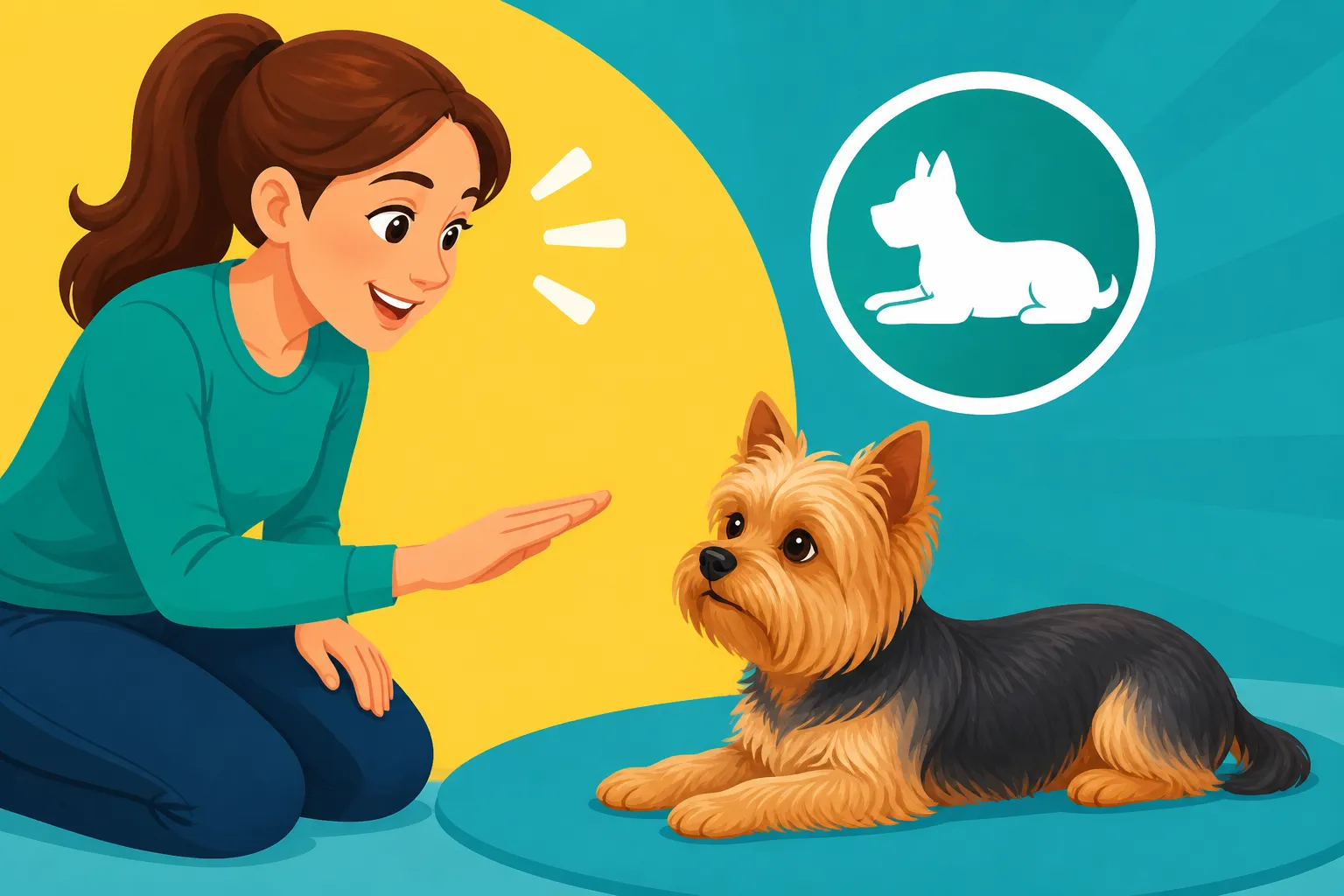
How to Teach a Yorkie to Down
Teaching your energetic Yorkshire Terrier the "down" command can feel like trying to convince a tiny, enthusiastic comedian to take a nap mid-performance. Many Yorkie parents struggle with this foundational command, often finding their pups eager to jump, bark, or do anything but lie down. This guide is here to walk you through a patient, positive, and proven method to master the "down" command, transforming those chaotic moments into calm compliance.
The Undeniable Importance of "Down" for Your Yorkie
The "down" command isn't just a fancy trick to impress your friends; it's a vital tool in your Yorkshire Terrier's behavioral toolkit. For such a small dog with a big personality, mastering this command offers significant benefits, both for their safety and your peace of mind. It’s a cornerstone of good manners and helps establish a clear line of communication between you and your pup.
Safety Beyond Obedience
Think of the "down" command as a safety net. Imagine you're out for a walk, and suddenly a squirrel darts across your path, or another dog appears unexpectedly. A reliable "down" can prevent your Yorkie from pulling on the leash, darting into a dangerous situation like oncoming traffic, or even getting underfoot in a crowded area. For instance, if you drop something potentially harmful on the kitchen floor, a quick "down" can keep your curious Yorkie from ingesting it before you can intervene. It gives you a moment to assess and control the environment, which is crucial for a breed that can sometimes be a little too fearless for its own good. This command becomes even more critical when teaching your Yorkie to walk on a leash safely.
Beyond immediate hazards, "down" can also be a lifesaver in scenarios like vet visits or grooming sessions. If your Yorkie can calmly lie down on command, it makes examinations easier for the vet and less stressful for your dog. It prevents them from trying to jump off the table or wriggle too much during necessary procedures, helping to ensure everyone's safety. This kind of command provides a baseline of control that can make countless daily interactions smoother and safer for your small companion.
Calming Hyperactivity and Managing Excitement
Yorkies are known for their lively and sometimes boisterous personalities. They can be prone to bursts of excited energy, jumping on guests, or barking incessantly when overstimulated. The "down" command is an invaluable tool for managing these high-energy moments and promoting calmness. When your Yorkie learns that lying down can earn them a reward, it provides an alternative, more appropriate behavior for situations where they might otherwise be acting out.
Consider a scenario where new visitors arrive at your home, and your Yorkie, full of joyous exuberance, starts jumping up and down, yapping for attention. Instead of struggling to physically restrain them, a simple "down" command can redirect that energy into a more composed state. It teaches them self-control and offers a way to settle themselves. This is particularly helpful if you're working on how to stop a Yorkie from barking, as often excessive barking stems from over-excitement or anxiety. By giving them a clear action to perform, you provide a constructive outlet for their energy, shifting their focus from uncontrolled excitement to a task-oriented calm.
Foundation for Other Commands
"Down" is more than just a single command; it’s a building block for a whole repertoire of advanced behaviors. Once your Yorkie understands how to reliably lie down, you can start layering on other commands. For example, "down-stay" becomes the natural progression, teaching them to remain in the down position for extended periods, even with distractions. This is incredibly useful for situations where you need your dog to be still, like during meal prep, when you’re answering the door, or if you need them to settle while you work.
The success your Yorkie experiences with "down" training also boosts their confidence and reinforces the idea that learning from you is a positive experience. This makes them more receptive to learning other commands like "stay," "come," or "leave it." It builds a foundation of trust and understanding, solidifying your role as a consistent and rewarding leader. Think of it as teaching a child their ABCs before moving on to reading novels; mastering the basics makes everything else easier and more enjoyable for both student and teacher.
Preparing for "Down" Training Success
Before you even begin to lure your Yorkie into a "down," setting the stage for success is absolutely essential. Rushing into training without the right preparation can lead to frustration for both you and your tiny trainee. Remember, consistency, patience, and a positive attitude are your best friends when training a Yorkshire Terrier.
Essential Tools and Treats
To make your "down" training sessions effective and enjoyable, you'll need a few key items. First and foremost, high-value treats are non-negotiable for a breed like the Yorkie. These aren't just any old kibble; we're talking about tiny, irresistible morsels that your dog absolutely adores. Think small pieces of cooked chicken, cheese, or even specially formulated training treats that are soft and easy to chew. For instance, brands like Zuke's Mini Naturals or Wellness Soft Puppy Bites are often big hits with small dogs. You can find a wide variety of these and other training essentials on Amazon, making it easy to stock up.
Secondly, consider using a clicker. While not strictly necessary, clicker training a Yorkie can be incredibly effective for precisely marking the exact moment your Yorkie performs the desired behavior. The click acts as a clear signal, telling them, "Yes! That's it! A treat is coming!" This helps them understand what they're being rewarded for more quickly than just offering a treat alone. Lastly, ensure you have a quiet, distraction-free space where you can conduct your training sessions without interruptions. This might be a calm corner of your living room or a designated training mat. For tips on specific treat choices, check out our guide on the Best Treats for Training a Yorkie.
Timing and Environment
The success of your training sessions often hinges on when and where you choose to train. For Yorkies, short, frequent sessions are far more effective than long, drawn-out ones. Their attention spans are relatively short, especially when they're puppies or easily distracted. Aim for 5-10 minute sessions, two to three times a day. This keeps training fun and prevents your Yorkie from getting bored or frustrated.
The environment plays a huge role. Start training in a calm, familiar space with minimal distractions. Turn off the TV, put away your phone, and make sure other family members or pets aren't interfering. As your Yorkie gets better at the "down" command, you can gradually introduce more distractions, but for initial learning, absolute focus is key. Trying to teach "down" while the mailman is at the door or another dog is barking outside will only lead to frustration and confusion for your pup.
Building a Positive Relationship
At the heart of any successful dog training is a strong, trusting, and positive relationship between you and your Yorkie. Training should never be about force or punishment; it's about guiding your dog with kindness and positive reinforcement training for Yorkies. When your Yorkie views you as a source of good things – treats, praise, toys, and affection – they will be much more eager to learn and cooperate.
Spend quality time with your Yorkie outside of training sessions. Play games, go for walks, and offer plenty of cuddles. This strengthens your bond and makes them more receptive to your guidance. If you're looking for structured ways to build this bond and tackle various training challenges, comprehensive programs like BAXTER & Bella offer online courses that emphasize positive, relationship-based training methods. These resources can provide invaluable support, especially if you're dealing with a Yorkie that's not listening or needs extra encouragement to connect with you during training. A dog that trusts and enjoys being with you is a dog that wants to learn for you.
Step-by-Step Guide to Teaching "Down"
Now that you're well-prepared, it's time to dive into the practical steps of teaching your Yorkie the "down" command. We'll focus on the lure and reward method, which is highly effective and gentle for small breeds. Remember to keep your voice positive, your movements slow, and your patience endless.
Lure and Reward Method
The lure and reward method is essentially guiding your Yorkie into the desired position using a treat and then immediately rewarding them. It's simple, clear, and very motivating for food-driven pups.
Step 1: Get Their Attention
Begin with your Yorkie in a sitting position, or at least calm and attentive. Hold a high-value treat close to their nose, allowing them to sniff it. Your goal is to get their undivided attention on that delicious reward. Make sure they are focused on the treat, not trying to jump for it. Having them sit first helps control their initial excitement and sets them up for a smoother transition into the down position. If your Yorkie is prone to jumping, you might want to review our guide on how to stop a Yorkie from jumping before starting this step.
Step 2: Lure from Nose to Floor
With the treat still at their nose, slowly move your hand straight down towards the floor, then subtly drag it away from them, creating an "L" shape or a sweeping motion along the ground, directly under their chin and towards their chest. This motion encourages their head to follow the treat down, and as their head lowers, their body naturally follows, guiding them into a lying down position. It's crucial that the lure movement is fluid and continuous, leading them into the position rather than just dropping the treat. If you stop the treat movement too early or release the treat while they're still halfway down, they might just sniff and stand up again.
Step 3: Mark and Reward
The instant your Yorkie's elbows touch the ground and they are in a full "down" position, even for a split second, immediately mark the behavior. This is where a clicker is invaluable: click the exact moment they lie down. If you're not using a clicker, a verbal marker like "Yes!" or "Good!" works too. Then, deliver the treat directly to their mouth while they are still lying down. The timing here is paramount; if you delay, your Yorkie might not associate the reward with the "down" position. Repeat this step multiple times within your short training session, focusing on consistency and positive reinforcement. Always remember to praise them warmly with your voice!
Step 4: Add the Verbal Cue
Once your Yorkie consistently follows the lure into a "down" position (typically after several successful sessions), you can start adding the verbal cue. Just before you perform the luring motion, say "Down." Then, proceed with the lure as usual. The moment they lie down, mark and reward. By pairing the word "Down" with the visual lure, your Yorkie will begin to associate the sound with the action. Over time, you can gradually reduce the reliance on the lure until your Yorkie responds solely to your verbal command. This systematic approach ensures that the command is truly learned, not just a reaction to your hand movement.
Troubleshooting Common Yorkie Challenges
Even with the best intentions, you might encounter some common hiccups when teaching your Yorkie to down. Don't get discouraged – these little dogs are smart, but they can also be stubborn or easily distracted!
My Yorkie Keeps Jumping Up
This is a classic Yorkie move! They see a treat, and their first instinct is to spring for it. If your Yorkie keeps jumping when you try to lure them down, it means the treat is too high or the lure motion isn't clear enough. Instead of holding the treat high, keep it very low to the ground, almost touching their nose. Move it slowly and deliberately along the floor, making it impossible for them to jump up to reach it. They'll have to follow it down. You might also need to be quicker with your lure movement to get them into position before they can even think about jumping. For more in-depth solutions to this behavior, consult our guide on How to Stop a Yorkie from Jumping.
My Yorkie Won't Stay Down
Getting them into the "down" position is one thing; keeping them there is another. If your Yorkie pops right back up after getting the treat, you’re not alone. This is often because they're not fully understanding that being down is the rewarded behavior, not just the act of going down. To fix this, start with very short durations. Reward them for being down for just one second, then two, then three, gradually increasing the time. You can also start delivering multiple small treats in quick succession while they are down, reinforcing the position. This is a crucial step before attempting to teach them a full "stay" command.
My Yorkie Gets Frustrated and Gives Up
Some Yorkies, especially if they're particularly intelligent or sensitive, might get frustrated if they don't understand what you want, or if the sessions are too long. If your Yorkie starts sighing, turning away, or walking off, it’s a clear sign they’re overwhelmed. Immediately end the session on a positive note, even if it's just rewarding them for a simple "sit." Keep sessions very short, perhaps only 2-3 minutes if frustration is an issue. Ensure your treats are truly high-value and that your praise is enthusiastic. Sometimes, a change of scenery or a break can do wonders. Remember, consistency over intensity is the goal. If your Yorkie is generally prone to behavioral issues, our article on Yorkshire Terrier Behavior Problems and Solutions might offer broader insights.
Proofing the "Down" Command
Once your Yorkie reliably performs "down" in a quiet, distraction-free environment, it’s time to "proof" the command. This means teaching them to respond consistently, regardless of distractions or location. Without proofing, your Yorkie might only perform "down" in your living room when it's just the two of you.
Varying Locations and Distractions
Start by practicing "down" in different rooms of your home. Then move to your backyard, a quiet park, or even a friend's house. Each new location introduces subtle new sights, sounds, and smells that act as minor distractions. Gradually introduce more significant distractions: another person walking by, a toy rolling past, or a low-volume TV. Begin with very short durations and high-value treats in these new environments. The goal is to show your Yorkie that "down" means "down" no matter what else is happening around them. This progressive exposure is key to building a truly reliable command.
Increasing Duration and Distance
Once your Yorkie is performing "down" with minor distractions, you can increase the duration they stay in the "down" position and the distance you are from them. Start by having them "down," taking one step back, then immediately returning to reward them. Slowly increase the number of steps you take away. Similarly, increase the time they are asked to stay down, always starting with very short intervals and gradually building up. Use a release cue like "Okay!" or "Free!" to signal that the command is over and they can get up, reinforcing that they shouldn't break the "down" until you say so. This takes patience and numerous repetitions.
Generalizing the Command
Generalization is about teaching your Yorkie that the "down" command is universal, not tied to a specific posture, hand signal, or environment. Practice the command while you're standing, sitting, or even moving. Use different tones of voice (though always positive). Eventually, you want your Yorkie to understand that "down" means "lie down" regardless of how you ask them, where you are, or what's happening around them. This comprehensive approach ensures that "down" becomes a truly ingrained and reliable behavior, a cornerstone of their obedience training. For more on structuring your training journey, you might find our guide on a Yorkshire Terrier Puppy Training Schedule helpful.
Integrating "Down" into Daily Life and Advanced Tips
Teaching "down" is just the beginning. The real magic happens when you integrate this command into your Yorkie's daily routine, making it a natural part of your communication. This not only reinforces the command but also enhances your dog's overall manners and responsiveness.
Regular Practice and Maintenance
Consistency truly is the secret ingredient when it comes to dog training. Once your Yorkie has a solid grasp of the "down" command, don't just stop practicing it. Incorporate it into your daily interactions. Ask your Yorkie to "down" before they get their meal, before you put on their leash for a walk, or when you settle down on the couch in the evening. Each successful execution reinforces the behavior and keeps it sharp.
Vary your rewards too. While treats are excellent for initial learning, start mixing in verbal praise, gentle pets, or even a favorite toy as a reward. This prevents your Yorkie from becoming solely dependent on food for compliance and makes the command more versatile. Even a quick "down" for a few seconds during a potty break can be a valuable refresher. Think of it like keeping your own skills sharp – if you don't use it, you might lose some of it. Regular, short bursts of practice throughout the day will ensure "down" remains a reliable and automatic response.
Combining "Down" with "Stay"
Once your Yorkie understands "down," the next natural progression is to combine it with "stay." This powerful combination teaches your Yorkie to lie down and remain in that position until released. This is incredibly useful for situations like managing excitement when guests arrive, keeping them safely in one spot while you handle something else, or simply encouraging calm behavior.
To teach "down-stay," first ask your Yorkie to "down." Once they are in position, say "Stay" clearly and hold up an open-palm hand signal (the universal "stay" signal). Start by taking just one step back, then immediately return and reward them with a treat and praise while they are still lying down. Gradually increase the distance and duration, always returning to them to reward before they break the "stay." If they get up, calmly put them back in the "down" position and restart the exercise at an easier level. Never punish them for breaking the stay; simply reset and try again. A solid "down-stay" can dramatically improve your Yorkie's overall obedience and self-control. For dealing with a dog that struggles with self-control, our article on How to Calm a Hyper Yorkie might offer some additional strategies.
When to Seek Professional Help
While teaching "down" is a fundamental command, some Yorkies, or their humans, might encounter persistent challenges. If you've been consistent, patient, and are still struggling, there's absolutely no shame in seeking professional help. A certified professional dog trainer, especially one experienced with small breeds, can offer tailored advice, identify specific issues, and demonstrate techniques that might resonate better with your Yorkie.
A professional can help if:
- Your Yorkie shows extreme resistance or fear.
- You're consistently getting frustrated and feel like you're making no progress.
- Your dog exhibits other behavioral issues that might be hindering training, such as severe anxiety or aggression.
Sometimes, an outside perspective and expert guidance are all it takes to unlock your Yorkie's potential. They can provide personalized strategies and help you build an even stronger bond with your furry friend. Don't hesitate to reach out to a local reputable trainer or consider online consultations for personalized support. This could be a good step if you find your Yorkie not listening despite your best efforts.
| Challenge | Possible Reason | Solution |
|---|---|---|
| Yorkie keeps jumping for the treat | Treat held too high; lure motion is unclear or too vertical. | Keep treat low to the ground, almost touching their nose. Use a smooth, low "L" or sweeping motion away from their body to guide them down. |
| Yorkie gets up immediately after reward | Doesn't understand that being down is the rewarded behavior. | Shorten duration. Reward for 1-2 seconds of being down, then slowly increase. Deliver multiple small treats while they are still in the down position. |
| Yorkie bites or nips at the treat hand | Too eager; lacks impulse control; treat is too big or hard to grab. | Offer treats gently. Use smaller, softer treats. If still nipping, pause, withdraw hand, then retry. Teach a "gentle" command. |
| Yorkie runs away or ignores the lure | Distractions are too high; treats not high-value enough; session too long. | Move to a quieter area. Use truly irresistible, high-value treats. Keep sessions extremely short (2-3 minutes). End on a positive note. |
| Yorkie just sits there and stares | Confused about the lure movement; needs more patience. | Exaggerate the lure motion. Ensure it leads directly into the "down" position. Break it down into smaller steps if necessary (e.g., reward for just lowering head). |
Disclaimer
The information provided in this article is for general informational purposes only and is not a substitute for professional veterinary advice or professional dog training. Always consult with a qualified veterinarian for any health concerns or a certified professional dog trainer for specific behavioral issues or training plans tailored to your individual Yorkshire Terrier.