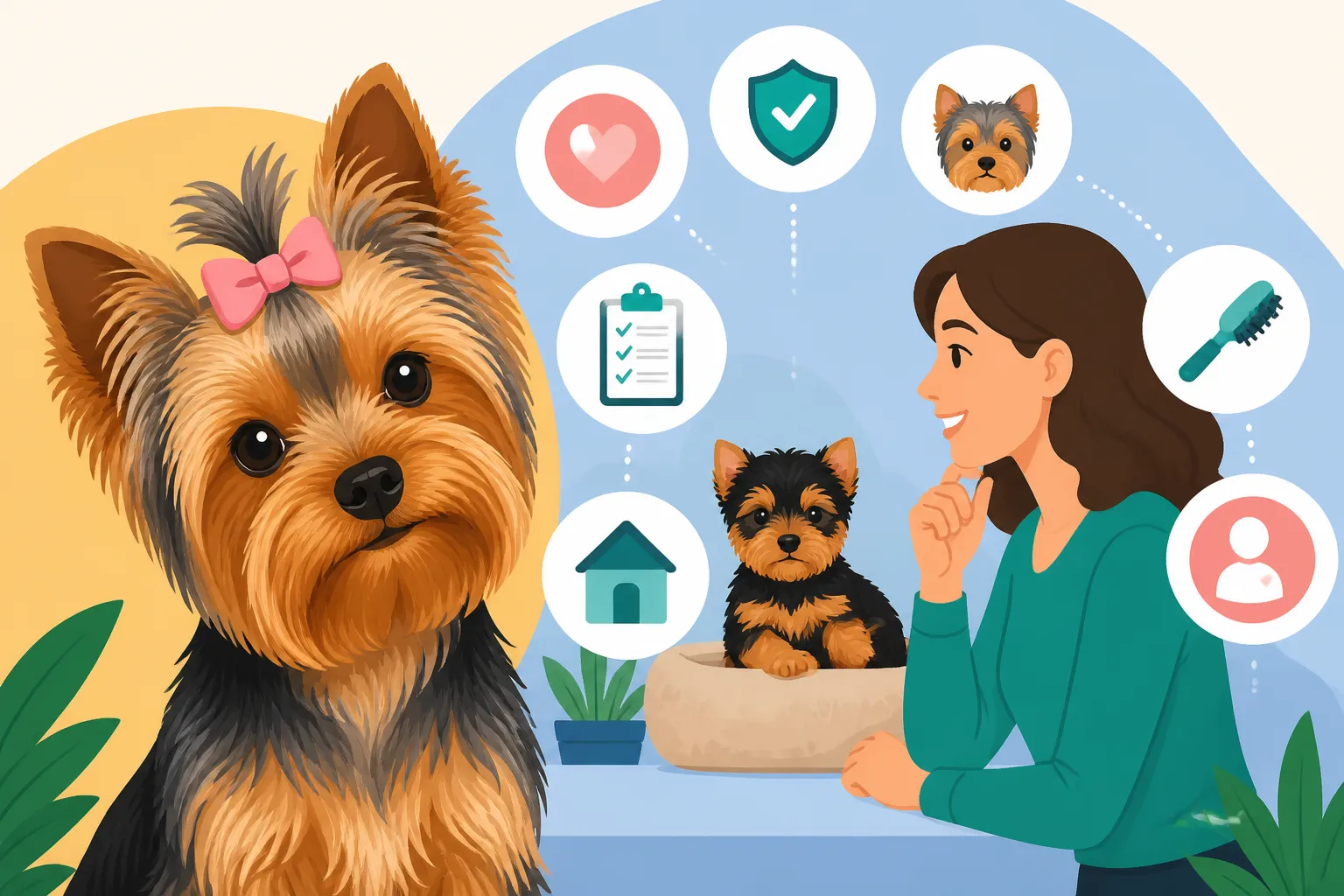
Questions to Ask a Yorkie Breeder
Bringing home a new Yorkshire Terrier puppy is an absolute thrill, but navigating the world of dog breeding can feel like walking through a minefield. With the rise of backyard breeders and commercial puppy mills, finding a healthy, well-socialized pup requires careful vetting and the right questions. This guide gives you the exact questions to ask a Yorkie breeder so you can protect your heart, your wallet, and your future fur baby.
Uncovering Health and Genetic History
When you sit down with a prospective breeder, your absolute top priority must be the long-term health of your future puppy. Yorkshire Terriers are delightful, spirited companions, but like all purebred toy dogs, they are prone to specific hereditary health conditions. A dedicated, ethical breeder will welcome your questions about health screening with open arms because they take pride in improving the breed line.
Genetic Screening and Health Clearances
You need to ask the breeder directly what genetic tests and health screenings have been performed on both the sire and the dam. Toy breeds frequently suffer from joint and organ issues, so ask if the parents have been cleared for patellar luxation, eye disorders, and cardiac conditions. Inherited conditions such as portosystemic shunts or progressive retinal atrophy can cause immense heartbreak and massive vet bills down the road if parents are not screened properly.
A trustworthy breeder will happily present documentation from recognized veterinary health registries rather than just giving you a verbal assurance. If you want to know How to Find a Reputable Yorkie Breeder, look for someone who willingly shows you official medical clearance certificates. If a breeder brushes off your questions by claiming their dogs “have never been sick,” consider that a major warning sign.
Family Medical History and Parental Health
Beyond standard health tests, ask detailed questions about the general health history of the puppy’s parents and grandparents. Ask how old the grandparents lived to be and what ultimate causes of death were observed in the lineage. Inquire specifically about any history of tracheal collapse, dental disease, or severe allergies in the breeding line, as these traits can be passed down to offspring.
Understanding the mother’s health history is especially critical because her physical condition during pregnancy and nursing directly impacts the health of the litter. Ask how many litters the mother has carried and how she recovered after each birth. A mother who is kept in peak physical condition produces stronger, more resilient puppies with far fewer early health complications.
Inoculations Parasite Control and Early Veterinary Care
Ask for a complete breakdown of the medical care the puppy has received since birth. You should inquire about the exact vaccination schedule used, when the puppy was dewormed, and whether a licensed veterinarian has performed a comprehensive physical examination. A reputable breeder will provide you with a clean, detailed health record stamped by their attending veterinarian.
Ask if the breeder has checked the puppy for common toy breed issues like hypoglycemia, umbilical hernias, or retained baby teeth. Knowing what care has already been administered allows you to smoothly transition your puppy to your own vet. If you are comparing care plans early on, exploring coverage through Healthy Paws can help protect you against unpredictable inherited health issues that might crop up later in life.
| Breeder Type | Health Testing Standard | Living Environment | Ongoing Support & Contracts |
|---|---|---|---|
| Ethical / Preserved Breeder | Full genetic testing, OFA clearances for parents, clear health records. | Raised indoors as family, clean, highly socialized environment. | Offers lifelong return policy, written health guarantees, expert mentoring. |
| Backyard Breeder | Minimal to no health testing, relies on “vet checked” claims. | Variable conditions; often kept in backyards, garages, or crowded rooms. | Limited or no contracts, no health guarantees, stops contact after sale. |
| Commercial Puppy Mill | No health screening; high risk of severe genetic defects. | Wire cages, overcrowded, unsanitary, isolated from human contact. | No genuine support, fake registration papers, restrictive or useless guarantees. |
Evaluating Breeding Practices and Environment
The environment where a Yorkie puppy spends its first eight to twelve weeks shapes its behavior, immune system, and emotional development for life. Asking targeted questions about the breeder’s facility and daily operations helps you determine whether you are supporting a loving home or an unethical commercial factory.
Sizing Up the Living Conditions and Socialization
Ask the breeder where the puppies are kept and whether you can tour the facility or join a live video call to inspect the environment. Yorkie puppies need to be raised inside a warm, clean, household setting where they can get used to everyday household noises like vacuum cleaners, televisions, and kitchen activity. Puppies raised in isolated barns, sheds, or dirty cages often grow up to be fearful and overly anxious adults.
Inquire about the daily cleaning routines and how much direct human handling the puppies receive each day. Ask if the breeder uses puppy playpens, soft bedding, and age-appropriate enrichment toys to stimulate early brain development. Understanding the daily life of the litter helps you visualize how well your puppy will adapt when you bring them home.
Litter Frequency and Dam Care
Ask the breeder how many litters they produce each year and how many active breeding females they care for. Ethical breeders focus on quality rather than quantity, usually limiting a dam to one litter per year or a few litters in her entire lifetime. If a breeder always has multiple litters available on demand, they may be running a high-volume commercial operation.
Don’t hesitate to ask what happens to the breeding mothers once they are retired from breeding. Responsible breeders treat their breeding dogs as beloved family pets who stay with them for life or are carefully rehomed to vetted, loving forever families. Seeing how a breeder treats their older, retired dogs tells you everything you need to know about their moral standards.
Red Flags in Breeder Operations
Ask the breeder about the terms used to describe their puppies, paying close attention to words like “teacup,” “micro,” or “rare.” Legitimate kennel clubs recognize standard Yorkshire Terriers, but runts bred down to dangerously small sizes often suffer from severe health defects. Learning to spot Yorkie Breeder Red Flags to Avoid will save you from supporting breeders who sacrifice dog health for trendy marketing terms.
Another red flag is a breeder who refuses to let you see the puppy’s mother. While the sire might live at another facility for breeding purposes, the dam should almost always be present and interacting naturally with her litter. If the breeder makes excuses for why the mother is unavailable, walk away immediately.
Assessing Temperament and Early Puppy Development
Physical health is only half of the equation; emotional stability and temperament are equally vital for a happy life together. Asking breeders about behavioral traits helps ensure you select a puppy whose personality matches your home, family dynamic, and daily energy level.
Parental Temperament and Behavioral Traits
Ask the breeder to describe the personalities of both the sire and the dam in detail. Is the mother confident and outgoing, or shy and skittish? Is the father energetic or calm? Temperament has a heavy genetic component, and puppies frequently mirror the behavioral tendencies of their parents.
If possible, spend time interacting with the mother during your visit or phone calls. A stable, friendly dam who greets visitors calmly is far more likely to raise confident puppies. Ask if any dogs in the line have shown signs of aggression, resource guarding, or severe nervousness, as these can be challenging behavioral hurdles to correct later on.
Early Socialization Protocols
Ask what specific socialization methods the breeder uses during the critical early development weeks. Programs like Early Neurological Stimulation (ENS) or structured sound exposure help puppies build resilience against fear triggers. Ask if the puppies have been exposed to children, adult men and women, other pets, and various floor textures.
Early potty awareness is another crucial topic to cover with the breeder. Ask if they have started litter box training, grass pad training, or basic crate exposure. A puppy that has already learned to keep its sleeping area separate from its potty spot will be significantly easier to housebreak once you start working through a Yorkshire Terrier Puppy Buying Checklist.
Matching Puppy Personalities with Your Lifestyle
Rather than just picking a puppy based on coat color or photos, ask the breeder to help match a specific puppy’s personality to your daily routine. Ethical breeders observe their litters daily and can point out which puppy is the adventurous leader, which one is quiet and observant, and which one is a cuddle monster.
Be honest with the breeder about your living situation, work hours, and family activity level. If you live in a quiet apartment, an ultra-bold, high-energy pup might bark out of boredom, whereas a calmer puppy would thrive. A good breeder knows their puppies intimately and will guide you toward the perfect lifelong match.
Navigating Contracts Guarantees and Documentation
A professional transaction should always be backed by clear, fair, and legally binding paperwork. Asking detailed questions about contracts and health guarantees protects both you and the breeder while setting clear expectations for the puppy’s future.
Registration Papers and Lineage Records
Ask the breeder what type of registration papers come with the puppy, such as American Kennel Club (AKC) or equivalent official registry documentation. Ensure the breeder provides full transparency regarding whether the registration is “Full” (breeding rights) or “Limited” (pet home only). Most ethical breeders sell companion puppies on limited registration to promote responsible pet ownership.
Ask to see the puppy’s pedigree charts, which should map out three to four generations of lineage. This documentation proves the puppy is a purebred Yorkshire Terrier and allows you to check for champion bloodlines or excessive inbreeding. Be wary of breeders offering non-recognized registry papers that offer no real proof of lineage.
The Fine Print of Health Guarantees
Ask the breeder to walk you through their written health guarantee section by section before you pay any deposit. A solid health contract usually covers genetic and congenital defects for at least one to two years. Make sure you understand what specific conditions are covered and what proof is required if a health issue arises.
Pay close attention to what the breeder requires you to do to keep the guarantee valid, such as taking the pup to a vet within 48 to 72 hours of pickup. You can review a detailed guide on Yorkie Health Guarantee Explained to fully understand what terms are standard versus restrictive. If a guarantee requires you to use only one specific brand of expensive supplements or voids if you vaccinate your puppy, proceed with extreme caution.
Spay Neuter Agreements and Return Policies
Inquire about the breeder’s policy regarding spaying or neutering your new pet. Many breeders require you to fix the dog at a specific age to protect their bloodline and prevent accidental litters. Ask what age their attending vet recommends for the procedure, as fixing a toy breed too early can sometimes affect bone and joint development.
Crucially, ask what happens if you ever find yourself unable to keep the dog due to illness, housing changes, or major life shifts. An ethical breeder will always insist on taking the dog back at any point in its life rather than letting it end up in a shelter. This safety net shows the breeder genuinely cares about the lifelong welfare of every animal they bring into the world.
Financial Transparency and Ongoing Breeder Support
Understanding the true financial picture helps you avoid unpleasant surprises and ensures you are fully prepared for the financial commitment of dog ownership. Beyond the initial purchase price, you need to budget for supplies, food, and long-term medical care.
Understanding Total Initial Costs and Inclusions
Ask the breeder for a complete, itemized breakdown of what is included in the puppy’s purchase price. Does the fee include initial vaccinations, microchipping, a starter kit of food, or a puppy care package? Knowing exactly what you are paying for helps you plan your initial shopping list without buying redundant items.
Be sure to ask about payment terms, deposit requirements, and refund policies if a medical issue is discovered before pickup. If you are trying to construct a overall lifetime budget, checking a Yorkshire Terrier Price Guide: Puppy to Lifetime will give you a clear baseline of expected expenses. Transparency around money is a key marker of a professional breeder.
Post Adoption Breeder Guidance and Mentorship
Ask the breeder what level of support they provide after you take your puppy home. A top-tier breeder acts as a lifelong mentor, welcoming your late-night phone calls or panicked texts about puppy behavior, feeding issues, or grooming questions. They should be thrilled to receive photos and updates as your puppy grows up.
Ask if the breeder provides a starter guide covering feeding amounts, grooming schedules, and local vet recommendations. Having an experienced mentor in your corner makes the initial transition home vastly less stressful for first-time owners.
Preparing for Long Term Care and Supplies
Ask the breeder what specific food the puppy is currently eating so you can purchase the exact same brand before bringing them home. Abruptly changing a toy puppy’s diet can cause severe stomach upset and dangerous drops in blood sugar. If you plan to transition your pup to a fresh-food diet from Ollie, ask the breeder how to slowly mix the new food over a ten-day period to keep digestion smooth and easy.
Ask what grooming tools, crates, and toys the breeder recommends for Yorkie coat care and safety. You can easily stock up on soft harnesses, playpens, and chew toys from Chewy to prepare your home ahead of arrival. Preparing your home thoroughly ensures your new Yorkie steps into a safe, welcoming, and well-equipped environment from day one.
When you take the time to ask these vital questions, you protect your household from heartaches and build a strong foundation for a loving, multi-year companionship. To make sure you don’t miss a single step, keep these key questions handy:
- Can you show me official health clearances and genetic test results for both parents?
- May I see the mother interact with the litter in the home where the puppies were raised?
- What socialization protocols, sound desensitization, and potty routines have you started?
- What is covered under your written health guarantee, and what is your return policy?
- What exact food, vaccination history, and care routine is the puppy currently on?
Disclaimer
This article is for general informational purposes only and does not constitute professional advice. Laws, prices and regulations vary by location and change over time. Consult a qualified professional for guidance on your specific situation.